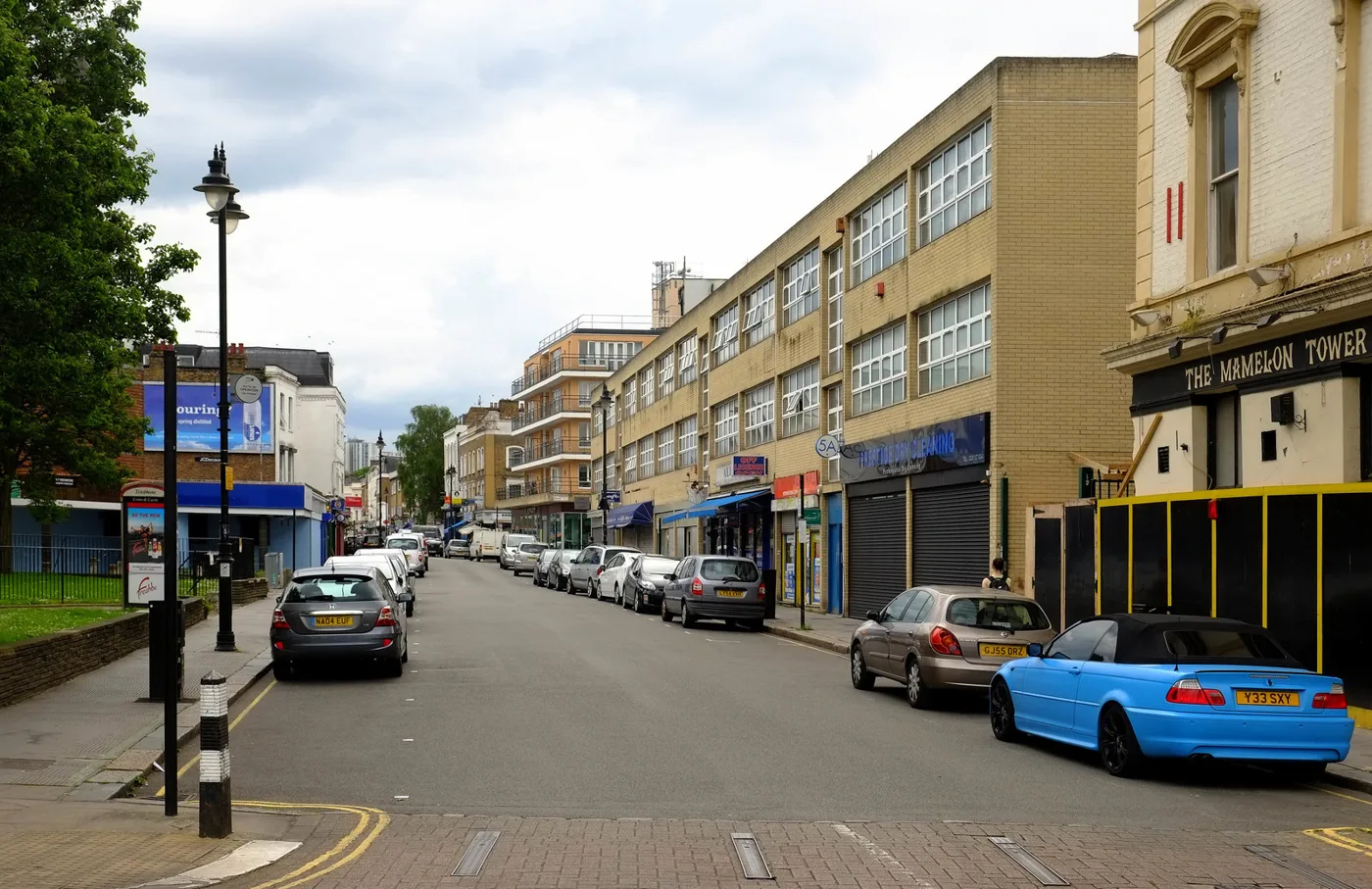

Only 2,781 of Camden's 35,421 controlled spaces are open to anyone paying. The 2026/27 tariffs by street, permit prices, and what is free on a bank holiday.
Every public highway in Camden sits inside a controlled parking zone. There is no street in the borough where you can leave a car during controlled hours without a permit, a paid session or an exemption. The council states it plainly in its annual parking report, and it is the single most useful thing to know before driving here.
The report counts 35,421 controlled spaces across 19 zones, each zone coded CA- followed by a letter. Of those spaces, only 2,781 are plain pay-for bays that anyone can use. Another 1,483 are shared between paying drivers and permit holders. Everything else is reserved.
Who Camden’s kerbspace is actually for
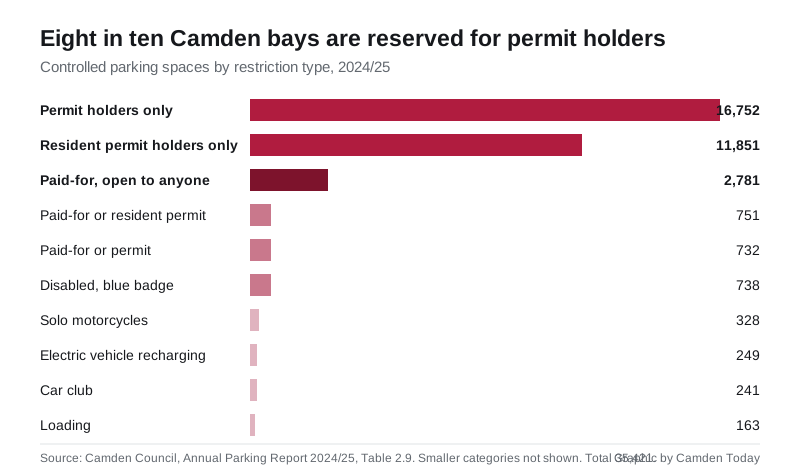
The numbers come from Table 2.9 of Camden’s nineteenth annual parking report, covering 2024/25 and published in October 2025. The report’s text says the borough has “over 35,700” controlled spaces. Its own table adds up to 35,421, so we have used the table.
What you pay by the hour
Camden has four paid parking tariffs, and which one applies depends on the street, not the zone. The rate then depends on your car’s emissions, with a surcharge on top for petrol cars registered before September 2015 and diesels registered before September 2019. Everything is paid through RingGo, by app, website or on 020 3003 2532. The council does not use QR codes and warns that scam “scan to pay” stickers have appeared on its signs.
These are the charges per hour from 1 April 2026:
| Emissions | Tariff 1 | Tariff 2 | Tariff 3 | Tariff 4 and coach bays |
|---|---|---|---|---|
| Electric | £3.84 | £4.83 | £6.63 | |
| 1 to 120g/km | £4.61 | £5.80 | £7.96 | £13.08 |
| Over 121g/km | £5.99 | £7.53 | £10.34 |
Air quality surcharges are added on top, per hour: £1.15 to £1.99 for a petrol car under 120g/km, £1.50 to £2.59 for a petrol car above it, £2.30 to £3.98 for a diesel under 120g/km and £3.00 to £5.17 for a diesel above it. A pre-2019 diesel over 121g/km in a Tariff 3 street therefore pays £15.51 an hour.
Which tariff applies where:
- Tariff 1 is the cheapest and covers most of the residential north and west of the borough, 174 streets including West End Lane, Mill Lane, Fortess Road, Highgate Road, Haverstock Hill, Belsize Park Gardens, Queen’s Crescent, Swains Lane and Vale of Health.
- Tariff 2 covers Camden Town, Primrose Hill, Euston and Hampstead village, 91 streets including Parkway, Arlington Road, Jamestown Road, Eversholt Street, Crowndale Road, Hampstead High Street, Heath Street and Rosslyn Hill.
- Tariff 3 is the most expensive and covers Bloomsbury, Holborn, Fitzrovia and Hatton Garden, 151 streets including Tottenham Court Road, High Holborn, Gray’s Inn Road, Great Russell Street, Russell Square, Lamb’s Conduit Street, Hatton Garden, Charlotte Street and Lincoln’s Inn Fields.
- Tariff 4 is bus bays on Albany Street, Bedford Way, Malet Street and Montague Place.
Five streets appear in two lists at once. Castlehaven Road, Fitzjohn’s Avenue, Royal College Street, South End Road and St Pancras Way are all named under both Tariff 1 and Tariff 2, so the schedule does not settle what a driver pays there. The sign at the bay does.
Solo motorcycle bays are separate and much cheaper: 66p an hour electric, £1.30 non-electric.
Source: Camden’s parking fees and charges 2026/27 (PDF), which lists every street by tariff.
Prices go up again on 1 October 2026
The same document sets a second set of charges that take effect on 1 October 2026, and they are not on any of the council’s ordinary web pages. Hourly parking rises by about 5.5%: Tariff 1 electric goes from £3.84 to £4.05, and Tariff 3 over 121g/km from £10.34 to £10.92.
Permits go up on the same date. If you are due to renew, doing it before 1 October is worth real money.
Resident permits
Permit prices depend on the length, the fuel and the CO2 figure on your V5C. These are the 12-month charges before 1 October, with the October figure alongside:
| Emissions | Now | From 1 October 2026 | Petrol surcharge (now) | Diesel surcharge (now) |
|---|---|---|---|---|
| Electric | £138.90 | £146.80 | none | none |
| 1 to 75g/km | £146.30 | £154.62 | £36.50 | £73.10 |
| 76 to 120g/km | £182.80 | £193.20 | £45.70 | £91.40 |
| 121 to 150g/km | £228.50 | £241.50 | £57.10 | £114.20 |
| 151 to 185g/km | £285.60 | £301.85 | £71.40 | £142.80 |
| 186 to 225g/km | £385.50 | £407.43 | £96.30 | £192.70 |
| Over 225g/km | £558.90 | £590.70 | £139.70 | £279.40 |
The surcharge applies to petrol cars first registered before September 2015 and diesels first registered before September 2019, and it is charged again on every renewal. A pre-2019 diesel over 225g/km costs £838.30 a year to park outside your own house.
Six-month permits start at £75 for an electric car. The top band is one of the few places the council contradicts itself: the fees schedule prints £322.70 and the web page prints £332.70. Motorcycle permits are £74.70 a year electric and £110.50 non-electric, and the non-electric one jumps to £146.30 in October.
Business permits are far dearer: £398.10 a year electric, rising to £1,270.60 for a car over 225g/km before any surcharge. Source: the council’s resident permit charges and the fees and charges PDF.
Visitor permits
Residents buy visitor permits by the hour. Electric is £1.31 an hour, £1.57 for a car up to 120g/km and £2.03 above that, plus the same style of surcharge. An all-day visitor permit, valid to the end of controlled hours, is £9.29 electric, £11.15 up to 120g/km and £14.49 above it.
Residents aged 75 and over, and disabled residents, pay half. The discounted short-stay rate is 65p an hour electric, 78p up to 120g/km and £1.02 above it. You have to add the qualifying information to your Camden Account and upload proof, which is why plenty of eligible people never get it. The rates are on the council’s visitor permit charges page.
Business visitor permits cost roughly three times the resident rate, from £3.76 an hour.
What is free on a bank holiday, and what is not
Camden publishes a bank holiday parking notice, and it is worth reading rather than guessing. On bank holidays these restrictions do not apply, and no penalty will be issued:
- resident and shared-use bays
- paid-for parking bays
- single yellow lines, unless kerb chevrons show a loading ban
- business permit bays, doctors’ bays, loading bays and market trader bays
These restrictions still apply, and a ticket can still be issued:
- double yellow lines
- loading bans marked by kerb chevrons
- bus stops, zig-zags, cycleways and box junctions
- footway parking, double parking and parking across a dropped kerb
- suspended bays, car club bays, coach bays and diplomatic bays
- electric vehicle charging bays
- blue and green badge holder bays, and dedicated disabled bays
Bus lane and moving traffic enforcement runs 24 hours a day through the holiday. Camden names two exceptions where it will not enforce on a bank holiday: the Laystall Street pedestrian zone, and the motor vehicle ban on Grafton Road between Barrington Close and Kiln Place. The full notice is on the public holidays parking page.
Blue badges, and the Green Badge trap
Camden has 738 blue badge bays, 124 dedicated disabled bays allocated to individuals, and 34 green permit bays. A blue badge lets you park in any blue badge bay, in a resident or paid-for bay, and on a single or double yellow line within your parking zone for up to three hours.
None of that applies in the Green Badge zone in central London. In the Green Badge zone a blue badge gets you nothing on yellow lines and nothing in resident bays. In paid-for bays you must buy a session, and displaying the badge then gives you one extra hour after it expires. Even for a stay under an hour, you have to buy a session first to earn the extra hour. Camden sets this out on its Green Badge zone page, and it is the most expensive misunderstanding available to a badge holder in this borough.
Blue badge concessions also do not apply on Camden’s housing estates at all. University College Hospital and Great Ormond Street run their own essential parking schemes for patients and families, arranged through the hospital rather than the council.
Estate parking
If you live on a Camden estate, parking is charged by the week and by engine size or CO2 rating. The cheapest band, for a car under 1300cc or 150g/km, is £2.78 a week on hardstanding for tenants and leaseholders, £3.80 partly covered and £5.98 covered. Private renters and businesses pay £16.17, £19.38 and £22.65 for the same spaces, plus VAT. Charges rise with each engine band, and are listed on the estate parking charges page.
Suspending a bay
Suspensions are expensive and the price rises with the length of the booking, not the other way round. From 1 April 2026 it is £79.63 per space per day for a single day, £87.61 a day for two to five days, and £151.34 a day for 43 to 183 days. Add a £66.66 administration fee, and £349.81 if you book at short notice. A skip suspension is cheaper, from £54.68 a day.
A “parking space” for this purpose is five metres.
Station parking
There is none worth planning around. Camden’s mainline stations are Euston, St Pancras International and King’s Cross, all terminals with no public commuter car park, and its other stations sit inside controlled parking zones with no station car park attached. If you are driving to a train, the practical answer in this borough is a paid bay under one of the four tariffs above, or the Tube. Our Camden Tube times and fares page has the alternative.
How much this raises
Camden issued 348,219 penalty charge notices in 2024/25, up 62,646 on the year before. The biggest single jump came from moving traffic contraventions, which reached 125,855. Parking PCNs were 219,055, of which 142,409 were higher-level.
The parking account took £49.263m and spent £14.933m running the service. Income was £12.945m from paid parking, £9.876m from permits, £20.624m from penalty charges and £5.417m from suspensions. The council’s own table prints the surplus as “34,3330”, evidently a typo; income minus expenditure is £34.330m.
By law that surplus can only go to a defined list. In 2024/25 Camden put £17.211m into highways and traffic work, £11.149m into Freedom Passes, concessionary fares and the Taxicard scheme, and £5.969m into home to school transport.
Of the PCNs that reached the independent adjudicator in 2024/25, 435 appeals were allowed and 1,175 refused. Only 0.33% of tickets went that far.
Also on Camden Today
- Camden bin collection days: the 12 streets with fixed windows
- Camden council tax bands: the full A to H table for 2026/27
- Camden roadworks and travel: closures and bay suspensions this week
Have your say